
From Port to Shelf: Container Planning for South American Kitchenware Importers
How South American importers can cut the uncertainty of long-haul sourcing with published 20- and 40-foot loading figures and an export-experienced factory.
Ocean freight changes the maths of sourcing. For an importer in South America, a product decision is also a freight decision: how many units fit in a 20-foot or 40-foot container, how evenly the cartons stack, and whether the supplier can produce the paperwork your customs broker asks for. Hongfair Export Zone publishes loading quantities for every appliance it lists, so most of that planning can be done before a single sample is requested.
Here is how a buyer can turn those figures into a container plan, step by step.
Fixing the model and its voltage
A shortlist built on freight data is easier to defend than one built on catalogue photos. Start narrow.
- Anchor the first order on one family. Double-wall kettles SD-1550, SD-1551, SD-1552 and SD-1502 at 1.5L, or the retro range SD-260, SD-261 and SD-259, pack, document and sell more easily than a scattered order.
- Check the voltage against the destination, not the catalogue. Kettles and cookware are listed at 220-240V. Toasters run at 120/230V and coffee makers at 120V/230V, so request the model-specific sheet before you commit.
- Note the neighbouring categories you can add later. Stainless steel cookware in 304/316 with a multi-layer bonded base, non-stick with honeycomb texture or ceramic coating, uncoated pure titanium, plus knives, accessories and drinkware all come from the same supplier relationship.
Turning loading figures into freight per unit
The Export Zone publishes 20-foot and 40-foot quantities by model. These ranges are enough to compare two candidates honestly.
| Model group | 20-foot (pieces) | 40-foot (pieces) |
|---|---|---|
| Retro kettles | 3,000 | 7,200 |
| Double-wall digital kettles | 2,700 | 6,600 |
| Stainless kettles | 3,294 | 8,076 |
| Glass kettles | 2,820 | 6,840 |
| Hotel kettles | 3,288 to 3,480 | 6,576 to 8,400 |
| Toasters | 1,960 to 4,872 | 4,800 to 10,160 |
| Coffee makers | 1,710 to 3,800 | 4,008 to 8,816 |
- Take the 40-foot figure for each shortlisted model and divide your freight quote by it. That is your freight cost per unit, known before samples.
- Repeat for the 20-foot box. A part load often wins when the first order is a trial.
- Weigh efficiency against demand. Toaster SDT-202 loads 4,872 pieces in a 20-foot and 10,160 in a 40-foot. Mini kettle SD-103 takes 3,480 and 8,400. High numbers mean little if the model does not sell in your channel.
- Record the figure next to the model in your worksheet, with the date and the container size. Loading plans do get revised, and an old number is worse than none.
Deciding what shares a container
Mixing is a packing question first and a commercial one second.
- Keep the pilot to one family. A single-family container is easier to pack, easier to document and easier to sell through. Add a second family once you know how the channel responds.
- Cookware and appliances can travel together. In general a mixed container is possible, subject to model availability and packing.
- Confirm the exact mix with the export team in writing, so the loading plan matches what is actually produced and stacked.
Setting dates and the paper trail
The published cooperation flow gives you a spine: requirement communication, sample confirmation, contract signing, then production and delivery. For a long-haul order, add two items of your own.
- Write a packing list tied to the container plan, not to a general product list.
- Agree the inspection point before departure, and name the person who signs it off on each side.
- Ask for the current certificate pack. The company lists ISO9001:2015, BSCI, FDA, LFGB and ISO14000:2015 among its qualifications. Confirm scope and validity, and ask which documents travel with each shipment.
- List what your customs broker needs and the marking and labelling rules at destination. Give every item an owner. Long-haul orders rarely fail on the product. They stall because a document was assumed rather than assigned.
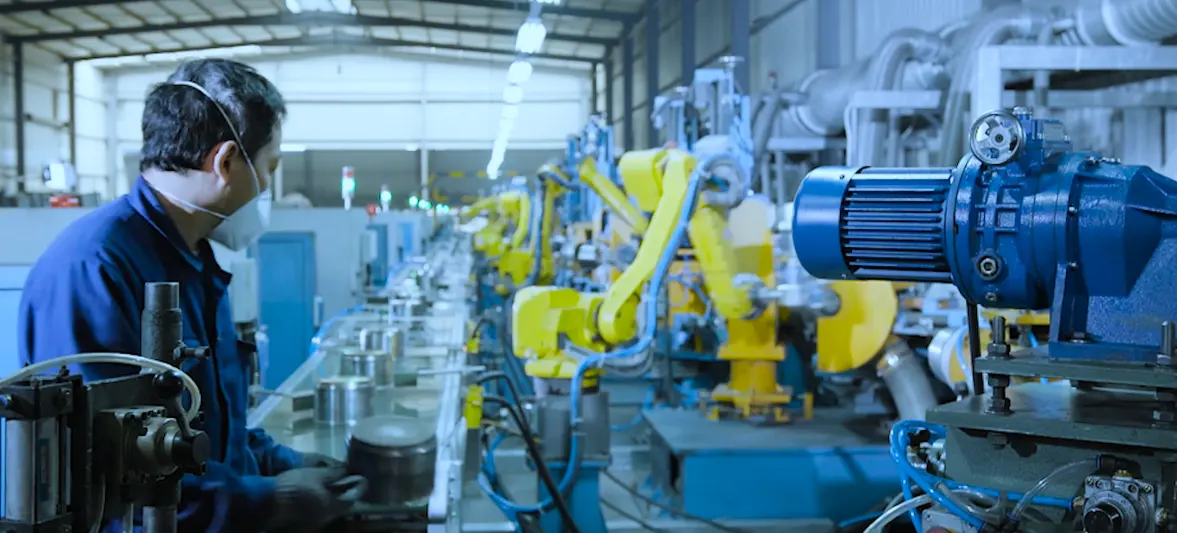
- Check factory depth behind the dates. Hongfair runs an in-house factory with 2,500-ton presses and Industry 4.0 lines, and more than 30 years of cookware manufacturing behind it.
- Run the pilot as one family, one container, one review. Measure sell-through and damage rates before the second order. It is slower than a broad launch, and considerably safer when freight and customs sit inside your cost base.
Importers can request a container-plan worksheet with 20-foot and 40-foot figures for the shortlisted models, together with the qualification pack and a model-specific voltage sheet. Tel / WhatsApp: +86 181 3885 8168. Email: hongfair@vip.163.com. Address: Room 910, Unit A, Block 2, Zhongliang Xiangyun Plaza, Longcheng Street, Longgang District, Shenzhen, China. More models and loading data: Hongfair export zone.