LFGB, BSCI and Design-Led Cookware: What European Buyers Should Verify Before an OEM Order
What to verify before an OEM order in Europe: certificate scope, factory conditions and the private-label sampling process.
A European retail buyer usually opens an OEM conversation with a question that sounds nothing like the one from a trading company in Asia. Not "how fast can you ship," but "what can I show my auditor." That question sets the order of work. Documents first, products second, and the commercial case only once both hold up. Hongfair's Export Zone publishes a qualification list you can test against: ISO9001:2015, BSCI, FDA, LFGB and ISO14000:2015, together with a factory description and a four-step cooperation flow.
Which certificates actually cover the product you are buying?
Start with the list, then read the fine print. LFGB is the German food-contact framework many European buyers ask for on anything that touches food. BSCI is a social-compliance audit scheme recognised by a broad range of retailers. ISO9001:2015 covers quality management, and ISO14000:2015 covers environmental management. FDA matters when the same programme also ships to the United States.
A certificate on the wall proves less than a certificate in scope. Ask for the current issue, check that the scope names the product families you are buying, and confirm validity dates before any sample is ordered. If the scope stops at stainless steel cookware and you are sourcing electric kettles, that gap is worth resolving early rather than at the port.
What should a buyer check inside the factory?
The Export Zone describes an in-house factory with 2,500-ton presses and Industry 4.0 production lines, and notes that those lines run cookware and small appliances alongside established German brands. For a European buyer, the value is traceability. Pressing, finishing and assembly under one management system are far easier to audit than a chain of subcontractors, where every handover is a place for records to go missing.
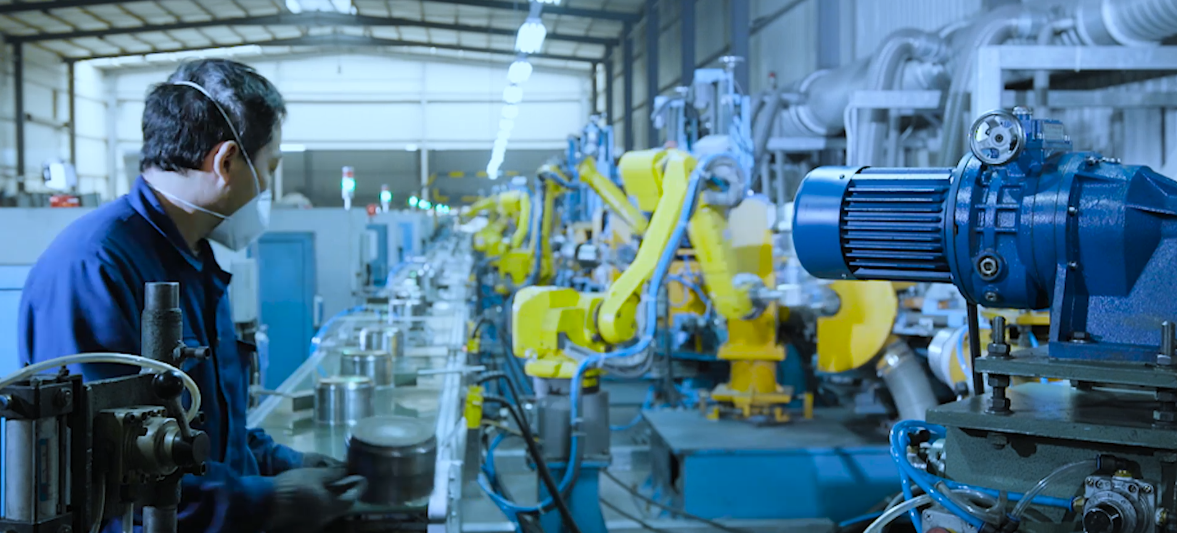
Ask to walk the line, not just the sample room. A sample room can be dressed for a visit. A press line, a finishing area and an assembly cell that you see running tell you how the order will actually be made.
Which models belong on a European shelf?
Retro and glass designs carry shelf presence in European retail, and the published ranges give you enough detail to shape an assortment before you ask for a quote.
| Range | Models | Key specification |
|---|---|---|
| Retro kettles | SD-260, SD-261, SD-259, SD-191, SD-190, SD-199, SD-198, SD-202 | Generally 1.7-2.0L at 220-240V, with water thermometer, gauge or window, stainless housing and colour painting |
| Glass kettles | SDG-183, SDG-184, SDG-186D, SDG-185, SDG-181, SDG-182 | 1.8L at 1500-1800W, glass housing, stainless heating element. SDG-186D adds digital control with LED display |
| Hand-drip coffee kettles | SD-133, SD-133F, SD-311S | 0.8L, gooseneck spout, digital base |
| Kettles with temperature setting | SD-182, SD-181, SD-185D | 0.8/1.0L, keep-warm and temperature setting |
| Coffee makers | SDCM-601, SDCM-02 | SDCM-601: 1.5L, 900W, anti-drip, water-level gauge. SDCM-02: 1.2L, washable permanent filter |
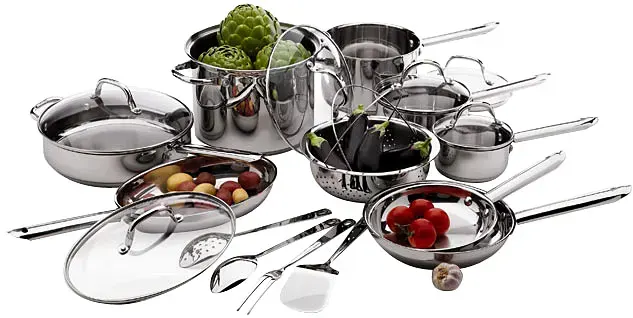
Titanium and stainless steel answer the material question. The cookware categories list Titanium Cookware as pure titanium, uncoated, lightweight and corrosion-resistant. Stainless Steel Cookware is 304/316 with a multi-layer bonded base and suits all cooktop types. Both lines let a European range speak to material-conscious shoppers without leaning on a short-lived trend.
Freight belongs in the range decision, not after it. Retro kettles are commonly listed at 3,000 pieces per 20-foot container and 7,200 per 40-foot. Digital double-wall models run at 2,700 and 6,600. Cost per unit landed is a more useful comparison than ex-works price alone.
How does the private-label and sampling process run?
Customised logo, packaging and colour are all available, but the order of work matters. European packaging usually carries multilingual text, recycling marks and regulatory information, and those details are where revisions multiply. Agree the technical specification and model number first. Artwork then sits on a stable base instead of being redrawn twice.
Send the regulatory text and artwork requirements at the sample stage, not at pre-production. A sample built against your market requirements settles most of the questions that would otherwise surface on the packing line. The published cooperation flow puts sample confirmation and contract signing ahead of production, so a first order can follow a simple sequence: audit, sample, scale. Request the certificates and check scope, shortlist two or three models from one category, confirm a sample against your market requirements, then place a pilot container. Because that order already matches the published process, it needs no special arrangements.
For European distributors and brand owners, the practical next step is to request the current qualification pack with the retro, glass and titanium catalogues, then nominate two models for sample evaluation. Hongfair Group Co., Ltd. (Shenzhen Hongfair Household Products Co., Ltd.) has more than 30 years of cookware manufacturing experience and provides OEM/ODM service for global customers, with an Export Zone covering electric kettles, coffee makers, toasters, blenders, stainless steel, non-stick and titanium cookware, knives, kitchen accessories and drinkware.
Trade enquiries: Tel / WhatsApp +86 181 3885 8168. Email hongfair@vip.163.com. Address: Room 910, Unit A, Block 2, Zhongliang Xiangyun Plaza, Longcheng Street, Longgang District, Shenzhen, China. The full range is listed at /export.html.